
Flat Roof Problems We See Every Spring in Indiana (And How to Fix Them)
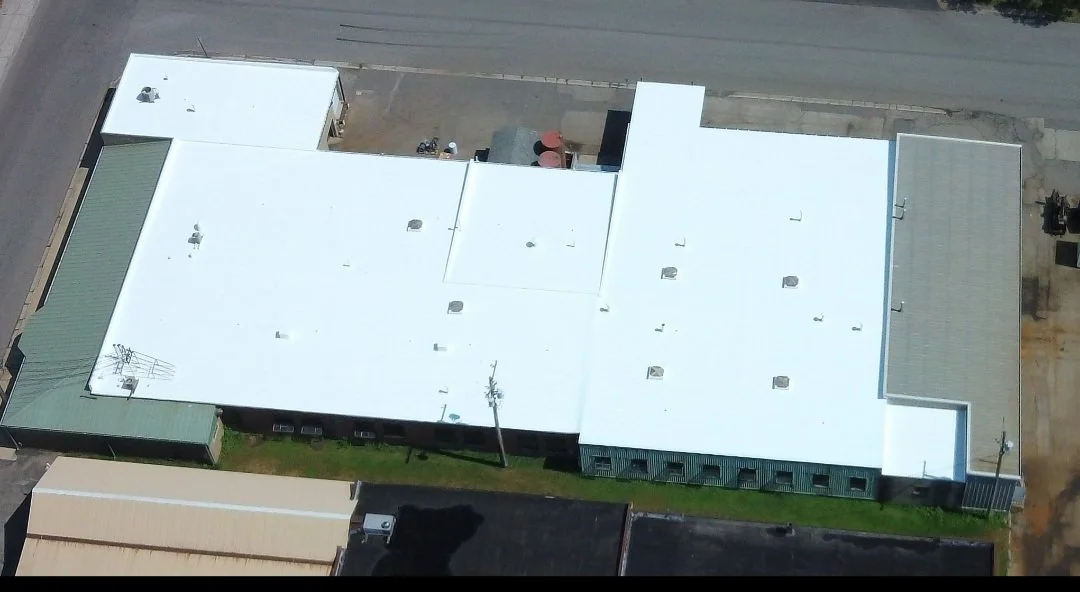
If you’ve got a flat or low-slope commercial roof in Indiana, spring is when everything starts to show up.
All winter long, your roof’s been dealing with:
Snow sitting for days (or weeks)
Ice buildup
Freeze-thaw cycles
Heavy winds
And now that we’re into April?
That damage doesn’t stay hidden anymore.
Around Elkhart and across Northern Indiana, this is the time of year when we start getting a lot of the same calls:
“We didn’t notice anything all winter… but now we’ve got leaks.”
Or:
“Water’s sitting on the roof longer than it used to.”
Or even:
“Everything looked fine from the ground, but now we’re seeing stains inside.”
Spring Is When Roof Problems Show Themselves
Here’s the thing most people don’t realize:
Spring doesn’t cause roof problems — it exposes them.
All the small issues that built up over the winter:
Loose seams
Tiny cracks
Worn-out sealant
Low spots holding water
They’ve been there.
But now with:
Warmer temps
Rain instead of snow
More consistent moisture
Those issues finally start turning into visible problems.
Why Flat Roofs Take It the Hardest
Flat roofs are especially vulnerable this time of year because they don’t shed water like steep-slope roofs do.
Instead, they rely on:
Proper drainage
Tight seams
Solid membrane condition
If any one of those is off, water sticks around — and that’s when problems start.
That’s why most of the spring issues we deal with come from:
Warehouses
Manufacturing buildings
Retail centers
Schools and churches
Basically, any building with a flat or low-slope system.
In the next section, we’ll break down the most common flat roof problems we see every spring — and how to fix each one before it turns into a bigger (and more expensive) issue.
Problem #1 – Ponding Water (And Why It’s a Bigger Deal Than You Think)
If there’s one issue we see more than anything else on flat roofs in the spring, it’s this:
Water that just won’t go away.
You walk the roof a day or two after it rains, and there it is — puddles sitting in the same spots. Maybe they’ve always been there. Maybe they’re new after winter.
Either way, ponding water is one of the fastest ways to destroy a commercial roof.
Why Ponding Gets Worse After Winter
Winter actually makes this problem worse in a few different ways:
Snow load can slightly shift the roof structure or compress insulation
Ice buildup can block drainage paths
Freeze-thaw cycles can create low spots where water collects
So even if your roof drained “okay” last fall, it might not be draining the same way now.
What Ponding Water Leads To
Standing water might not seem like a big deal at first, but over time it causes:
Membrane breakdown from constant exposure
Increased risk of leaks as water finds weak points
Added weight on the roof structure
Faster aging of the entire system
And once water starts sitting regularly, it’s only a matter of time before it works its way inside.
How We Fix It
The fix depends on how bad the ponding is, but here’s how we typically handle it:
Minor Ponding:
Improve drainage paths
Reinforce problem areas
Apply a Conklin restoration system to seal and protect the surface
Moderate to Severe Ponding:
Build up low areas with targeted solutions
Reinforce with fabric where needed
Fully restore the roof with a seamless waterproof coating
The key is this:
You don’t ignore ponding — you correct it before it turns into leaks.
What to Watch For Right Now
If you’re not sure whether ponding is an issue on your building, here are a few signs:
Water still sitting 48 hours after rain
Stains or dirt rings where puddles form
Recurring leaks in the same areas
Sections of the roof that always look darker
If you’re seeing any of that, it’s worth getting it checked out.
Problem #2 – Seam Failures and Membrane Splits
After ponding water, this is probably the next most common issue we see every spring:
Seams starting to come apart.
Or worse — small splits forming in the membrane.
And the tricky part? Most of the time, you won’t notice it from the ground. Everything looks fine… until it isn’t.
Why Seams Fail After Winter
Your roof goes through a lot during a Midwest winter. Temperatures can swing 30–40 degrees in a single day. That constant expansion and contraction puts stress on:
Seams
Flashing
Transitions around penetrations
Over time, that stress causes:
Adhesives to weaken
Seams to pull apart
Membranes to shrink or crack
Then spring hits, and water finally finds those openings.
Why This Turns Into Leaks Fast
Seam failures are one of the most common causes of leaks because they run right along the system.
So instead of water coming through one small hole, it can:
Travel along the seam
Spread out under the membrane
Show up somewhere completely different inside the building
That’s why a leak might show up 10–20 feet away from the actual problem area.
What This Looks Like on Your Roof
When we walk roofs in April and May, we’re looking for things like:
Seams that are lifting or curling
Gaps forming between membrane sections
Cracks near penetrations (vents, units, skylights)
Areas where the membrane looks dry or brittle
Even small separations can turn into big problems once spring rain hits.
How We Fix It
This is where quick patches usually fall short.
You can seal one seam… but what about the rest of the roof?
That’s why we typically recommend:
Targeted Repairs (Short-Term):
Reseal problem seams
Reinforce weak areas
Stop active leaks
Full Restoration (Long-Term):
Reinforce all seams across the roof
Seal penetrations and transitions
Apply a seamless Conklin coating over the entire system
That way, you’re not chasing leaks — you’re eliminating the weak points altogether.
Why This Matters Right Now
Spring is when these issues go from minor separation to active leaks.
If your roof is:
10+ years old
Starting to dry out
Or already patched in multiple areas
There’s a good chance seam failure is already happening — even if you haven’t seen leaks yet.
Problem #3 – Failing Flashing and Roof Penetrations
This one gets overlooked all the time — but it’s a major source of spring leaks.
Your roof isn’t just one big flat surface. It’s full of penetrations and transitions, like:
HVAC units
Vents
Pipes
Skylights
Edges and curbs
Every one of those spots has to be properly sealed. And over time, those seals break down.
Why These Areas Fail First
Think about it — these are the most vulnerable parts of your roof.
They deal with:
Constant expansion and contraction
Movement from equipment (especially HVAC units)
Direct exposure to water and debris
Then winter hits, and:
Sealants shrink in the cold
Flashing loosens
Ice works its way into tiny gaps
By the time spring rolls around, those small gaps turn into entry points for water.
Why Leaks Show Up Around Units
If you’ve ever noticed leaks near:
Rooftop units
Vents
Skylights
…it’s usually not a coincidence.
Water almost always finds the path of least resistance — and these areas are full of seams, edges, and transitions where water can sneak in.
What This Looks Like on Your Building
In spring, we commonly see:
Cracked or dried-out sealant
Loose flashing around units
Gaps at roof edges or curbs
Rust or deterioration on metal components
And inside the building:
Water stains near ceiling penetrations
Drips near HVAC units
Moisture showing up after heavy rain
How We Fix It
You can keep resealing these areas year after year… or you can fix them the right way.
Here’s how we approach it:
Short-Term Fix:
Reapply sealant
Patch problem areas
Stop immediate leaks
Long-Term Fix (What We Recommend):
Reinforce all penetrations with fabric and coating
Seal every transition point across the roof
Apply a full Conklin restoration system over everything
That creates a seamless barrier, so water can’t sneak in around those weak points anymore.
Why This Matters in Q2
Spring rains are constant — and these weak spots get tested over and over again.
If flashing or sealants are starting to fail, it’s not a matter of if they’ll leak…
It’s when.
What to Do If You’re Seeing These Problems Right Now
If you’re noticing any of the issues we just talked about:
Ponding water
Seam separation
Cracked sealant or failing flashing
New leaks showing up this spring
Don’t ignore it.
Because here’s the reality:
None of these problems fix themselves.
And once spring rain and summer heat hit, they only get worse — and more expensive to deal with.
Step 1: Get Eyes on the Roof
The smartest move you can make right now is simple:
Not just a quick glance — a full walk-through by a commercial roofing contractor who knows what to look for.
At American Builders, we’ll:
Walk the entire roof
Take photos of problem areas
Show you exactly what’s going on
Explain what’s urgent vs. what can wait
No guessing. No surprises.
Step 2: Decide on the Right Solution
Once you know what you’re dealing with, you’ve got options:
If the issues are minor:
A targeted repair might buy you some time.
If the problems are spread out:
That’s where restoration usually makes the most sense.
Instead of chasing multiple issues across the roof, we:
Fix all problem areas
Reinforce weak spots
Seal the entire system
So you’re not dealing with the same headaches every season.
Step 3: Take Care of It Before Summer
This is key.
Right now, in April, you still have:
Time to plan
Better scheduling availability
A chance to fix things before peak heat and storms
Wait a couple months, and:
Problems get worse
Schedules get tighter
Costs can go up
Final Thought: Spring Is Your Opportunity
We say this all the time to building owners across Elkhart and Northern Indiana:
“Spring is when you find roof problems — and it’s also your best chance to fix them the right way.”
You can either:
Stay ahead of it now
orReact to it later
Let’s Take a Look
If your roof didn’t come out of winter in perfect shape (and most don’t), let’s take a look.
American Builders provides free commercial roof inspections across Indiana, Michigan, Ohio, and Illinois. We’ll give you a clear picture of where things stand — and what your next move should be.
No pressure. Just real answers.
Reach out today and let’s get your roof handled before summer hits.