
Is Your Commercial Roof a Good Candidate for Restoration This Spring?
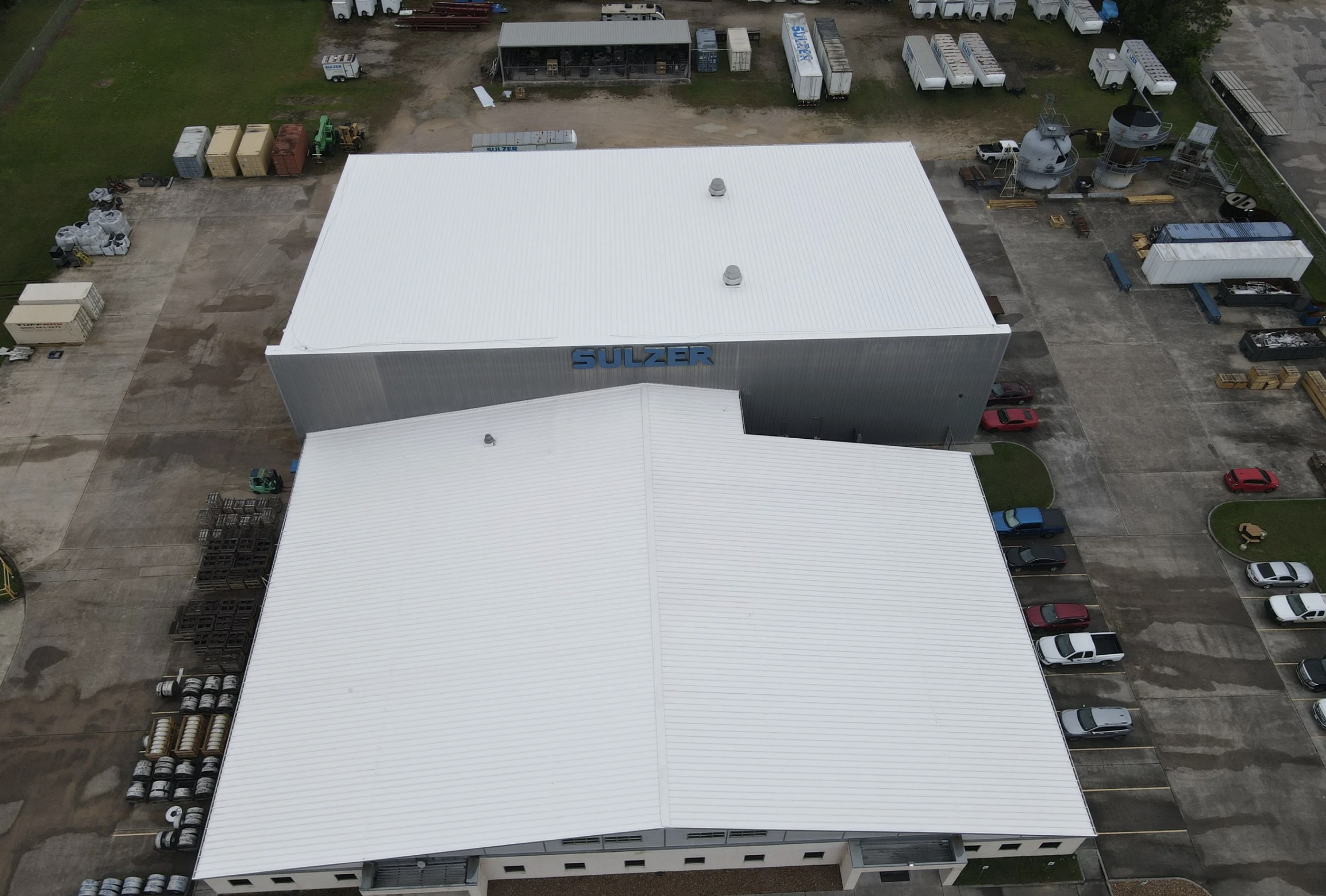
If your commercial roof made it through another Midwest winter, you might be wondering:
“How much life does it really have left?”
That’s a fair question — especially this time of year.
Around Elkhart and across Indiana, spring is when building owners start noticing things. New leaks show up after snow melt. Water sits on the roof longer than it should. Seams start to separate. Energy bills creep up as temperatures rise.
And usually, the next thought is:
“Are we looking at a full replacement?”
But here’s the thing — in a lot of cases, you’re not.
Most Roofs Don’t Need to Be Replaced (Yet)
We inspect commercial roofs every day this time of year, and most of them fall into the same category. They’re structurally sound, but starting to show wear. Maybe there are a few leaks. Maybe certain areas are aging faster than others. But the roof as a whole isn’t failing.
That’s exactly where roof restoration makes the most sense.
Instead of tearing everything off and starting over, restoration allows you to fix problem areas, seal the entire system, and extend the life of your roof by 10–20 years. You avoid the cost and disruption of a full replacement, while still ending up with a roof that performs like it should.
Signs Your Roof Is a Good Candidate for Restoration
When we’re up on a roof, we’re not just looking for leaks — we’re looking at the full system.
The first thing we check is whether the roof is still structurally sound. If the deck underneath is solid, with no major sagging or widespread soft spots, that’s a strong indicator restoration is on the table.
From there, we look at how leaks are showing up. If they’re isolated — maybe around seams or penetrations — that’s pretty normal for an aging roof. It doesn’t mean the whole system is done. It usually just means those weak points need to be reinforced and sealed.
Age is another factor. Most commercial roofs start to show wear somewhere around 10 to 15 years. You might see the membrane drying out, small cracks forming, or seams beginning to weaken. That’s actually the ideal window for restoration. Catch it there, and you can add another decade or two to the roof’s life.
We also pay attention to repair history. If you’ve been fixing something every year — or chasing leaks from one spot to another — that’s a sign the system needs more than patchwork. It doesn’t necessarily mean replacement, but it does mean it’s time for a more complete solution.
And then there’s ponding water. It’s common on flat roofs, especially after winter. But in many cases, it can be addressed as part of a restoration, rather than requiring a full tear-off.
Signs Your Roof Might Not Be a Good Candidate
Now, to be clear — not every roof can be restored.
If there’s major structural damage, like a failing deck or significant sagging, restoration isn’t going to cut it. The roof needs to be rebuilt from the base up.
The same goes for widespread saturated insulation. If water has worked its way deep into the system across large areas, it needs to be removed and replaced — not sealed over.
We also see roofs with multiple old layers or a history of poor installation. In those cases, the system may be too far gone to build on reliably.
That said, you really don’t know until someone gets up there and looks. We’ve seen plenty of roofs people assumed needed replacement that were actually great candidates for restoration.
What a Roof Restoration Actually Does
A lot of people hear “restoration” and think it’s just coating over the roof.
That’s not how we do it.
A proper Conklin roof restoration starts with a full inspection and prep. We clean the surface, identify problem areas, and get everything ready so the system bonds correctly.
Then we handle the repairs — sealing seams, reinforcing penetrations, and fixing any weak spots. Only after that do we apply a seamless, waterproof coating across the entire roof.
The end result is a fully sealed system that protects against leaks, reflects heat, and gives your roof a fresh, like-new surface.
Why Spring Is the Best Time to Make This Call
Spring is when everything shows up.
All the wear and tear from winter becomes visible, which makes it easier to spot issues and deal with them before they get worse.
It’s also the best time to plan. You’ve got more flexibility with scheduling, and you can lock things in before summer hits and projects start stacking up.
Most importantly, you’re getting ahead of the problem instead of reacting to it later.
The Next Step Is Simple
If your roof is showing signs of age, leaking in a few spots, or just hasn’t been checked in a while, the next step isn’t to guess.
It’s to get it inspected.
At American Builders, we provide free commercial roof inspections across Elkhart, Indiana, and the surrounding Midwest. We’ll walk your roof, take photos, and show you exactly what’s going on — then give you a clear recommendation based on what we see.
If restoration makes sense, we’ll show you how. If it doesn’t, we’ll tell you that too.
Final Thought
Most commercial roofs don’t need to be replaced when problems start.
They just need the right solution at the right time.
And for a lot of buildings this spring, that solution is restoration.
See our past work here. And contact us below!